Fellas
There was a game I used to play in my apartment back then, on PlayStation 3 Skyrim.
An open-world fantasy RPG where you could do just about anything. Swing swords, learn magic, hunt, fight dragons, craft, explore.
It had a hundred different ways to measure progress, but for some reason, I kept coming back to lock-picking. It wasn’t the most exciting skill, just one of many. But something about it drew me in.
The quiet challenge of it. The way a single wrong turn could snap the pick in half, sending you right back to start.
There was no rushing it. You had to listen, not with your ears, but with your hands. Every tiny movement mattered. Push too hard, and the lock fought back. Ease up too much, and nothing turned.
You learned to feel for the subtle give, the click buried inside the tension.
Sometimes you’d waste a dozen picks on one door. Other times, it opened on the first try.
It wasn’t luck. It was patience. I realized life works the same way. Especially with people.
You can’t force a lock open. Not a door, not a heart, nor a child. The harder you push, the more resistance you meet.
But when you slow down long enough to feel the tension instead of fighting it, something changes. You start to understand what’s actually keeping it closed.
Children learn through rhythm. They remember patterns more than speeches. When they can predict your next move; the Friday call, the Sunday breakfast, the way you always ask about their art or their day, it settles something inside them. It tells them the world might shake, but you will not.
That’s the power of ritual. It rewires uncertainty into trust. It replaces “maybe” with “always.” It doesn’t erase the pain of separation, but it builds a bridge strong enough to carry love across it.
Ritual is how fathers build trust; restraint is how they protect it.
The moment you begin to rebuild, emotion comes knocking. And it rarely arrives gently. It shows up in your child’s tone, or a slammed door. Every time you respond with calm instead of control, the bridge holds.
Facing Your Child’s Anger Without Losing Your Composure
A child’s anger can feel like betrayal. It can come as a glare that lingers too long, a shrug that says you don’t matter, or silence thick enough to choke a room.
Sometimes it’s distance, sometimes defiance. But the hardest kind is when their anger sounds rehearsed. When the words don’t quite fit their mouth, yet still find their mark.
It’s easy to take that as proof that you’ve lost them. But anger, especially from a child, is rarely rejection.
It’s confusion wearing armor. It’s pain looking for proof that you can stand firm and still love them through the storm.
When the outburst comes. Pause. Not because silence will fix it, but because one of you has to stay grounded. Your calm is what tells your child we can feel this and survive it.
Your presence becomes the map they follow when they’re lost inside their own storms.
That’s why it matters so much. Because one day, they’ll face their own conflict, and somewhere deep inside, your voice; the calm one, the patient one will echo back.
Why it Hurts
When your child repeats words that wound, it’s not just sound, it’s history.
You hear every sacrifice, every sleepless night, every mile driven and compromise made, collapsing into a single sentence that doesn’t sound like love.
That’s why it cuts so deep. But lies only take root when the accusation touches something you already fear is true.
It hits the oldest doubt most fathers carry; the fear that your love wasn’t enough, that distance became the author of the story instead of you.
Your work is to separate their words from your worth. They’re repeating emotion, not judgment. Children mirror the “strongest voice in the room”, even when they don’t understand it.
You can’t stop every false word from being spoken. You can make sure they don’t find a home inside you. The man who knows his truth doesn’t need to raise his voice; he just keeps living it.
And when your child sees that you’re still calm, still here, still loving they start to wonder if maybe the words weren’t true after all.
That’s how repair begins. Not with correction, but with presence strong enough to outlast the noise.
Don’t fight the story live the truth:
Name what’s happening, without heat.
You can say: “I know you’ve heard some things about me. That must feel strange. I’m still your dad, and I love you.”
When you put words to what’s real, you take weight off your child’s shoulders. You make it safe for them to stop pretending they don’t notice the tension.Reward connection, not confrontation.
When your child speaks from their own heart, meet it with warmth. When they echo anger, stay neutral and steady. You’re showing them, without lectures, which kind of communication builds closeness.Strengthen your body to steady your mind.
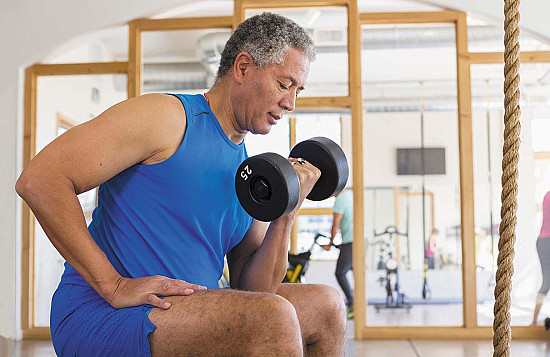
Exercise is recalibration. Run, lift, stretch. A strong body carries emotion without breaking. When you train discipline physically, it shows up emotionally.Write instead of react.
When something hits hard, record it. What was said. How you responded. Writing turns chaos into clarity. You’ll see progress where emotion once blurred it and you’ll know when you’ve grown.Turn conflict into compassion practice.
When your child repeats hurtful things, see the message beneath the words they’re confused and afraid. Respond with patience. What you model now will become their blueprint later.
Even When They Act Distant
When a child shuts down, it doesn’t always look like silence. Sometimes it’s attitude. Sometimes it’s noise. Sometimes it’s the long stare that says, you don’t get to reach me anymore.
But even then, they’re watching. Listening. Waiting. Testing whether your love can outlast their distance.
Your consistencies become the quiet proof. The text you send, the call you make even when it goes unanswered.
Those acts build a rhythm your child learns to trust. It tells them, he’s still here.
None of this happens overnight.
The words will still sting, and the silence will still ache. Some nights you’ll replay the same conversations in your head, wondering if anything you said, or didn’t say made a difference.
There’s no finish line for this kind of work. The days will blur, the progress will come slow, and you’ll wonder if any of it is worth it.
But this is how love builds its strength. Not in bursts, but in the slow weight of repetition. In every calm word. Every moment you stayed when it would’ve been easier to go.
Locks don’t open all at once; they click, one patient turn at a time.
And one day, they’ll see what it took,
and that will speak louder
than anything you could ever say.
Until next time,
Barkim.
P.S. I appreciate all your replies in the polls. If this one hit home, send it to another father who’s in the fight. We’re all trying to stay steady out here. And sometimes, one story is all it takes to remind a man he’s not alone.

Quotes:
“Do not go where the path may lead, go instead where there is no path and leave a trail.” – Ralph Waldo Emerson
“The best way to predict your future is to create it.” – Abraham Lincoln
“Life is not measured by the number of breaths we take, but by the moments that take our breath away.” – Maya Angelou
“It is not the answer that enlightens, but the question.” – Eugène Ionesco
“Wisdom is not a product of schooling but of the lifelong attempt to acquire it.” – Albert Einstein
“He who learns but does not think, is lost. He who thinks but does not learn is in great danger.” – Confucius
“In the middle of difficulty lies opportunity.” – Albert Einstein
“Your time is limited, so don’t waste it living someone else’s life.” – Steve Jobs
“Life is a succession of lessons which must be lived to be understood.” – Helen Keller
“Patience is the companion of wisdom.” – Saint Augustine
Health/Tools:

:max_bytes(150000):strip_icc()/GettyImages-180033676-5bf445594cedfd0026dd6efc.jpg)

News/Info: